The Longest Continuous Business in Plano

The third in our series of profiles of local businesses features Cooper Home Furnishings.

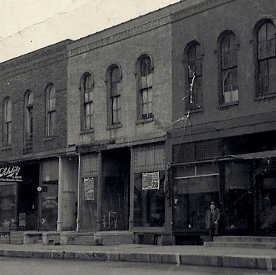
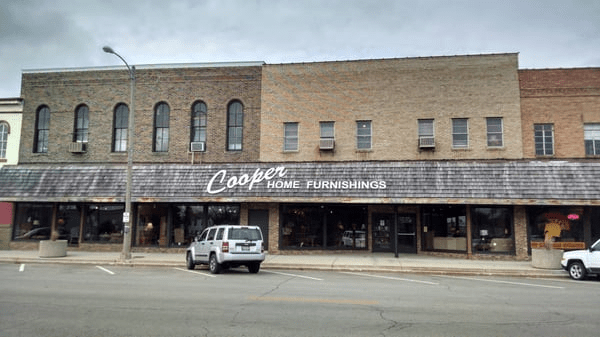
On Main Street in Plano, next to the old hotel, is Cooper Home Furnishings. Its story begins in the late 1800s with William Wallace Owen, often referred to as W.W. Owen. As a teenager in the 1860s, he moved from New York to Sycamore Illinois, where he married in 1870. In 1885, Owen and his wife relocated to Plano and he opened W.W. Owen & Company Furniture & Undertaking on Main Street. The business flourished and W.W. Owen became a prominent and respected citizen of Plano.

In July 1907, Charles E. Clouse took over W.W. Owen’s business, but Owen retained ownership of the building. Two weeks later, the Kendall County News announced the sale of the Plano Hotel to Valentine Cooper of Chicago. At that time, W.W. Owen’s furniture and undertaking business was located on the same block as the hotel, but they were not adjacent. Valentine Cooper moved with his family to Plano, where he and his son, Ambrose, 20, would run the hotel.

Only one year after their arrival in Plano, the Cooper family experienced the tragic death of Valentine’s wife, Fredreka. After she crossed the street from the hotel to the Plano train depot to drop off a package to be shipped, Fredreka stepped onto the tracks and was fatally hit by a train.

Valentine soon sold the hotel to Herbert Gage, the postmaster of Pingree Grove, Illinois and owner of a general store there. Valentine and Ambrose then moved to Pingree Grove, where they ran a general store and Valentine took over as postmaster (it appears Valentine Cooper and Herbert Gage traded businesses and positions).

After Valentine Cooper died in 1918, Ambrose took over as postmaster and continued to run the store until the mid-1920s when he returned to Plano. Having graduated from embalming school in 1925, Ambrose Cooper worked at Charles Clouse’s furniture and undertaking business for two years before they formed a partnership in 1927. The store was renamed Clouse & Cooper.

W.W. Owen, from whom Clouse had purchased the business, had died in 1911. A record of Mr. Clouse buying the building has not been located, so the building may have still belonged to the Owen family when Ambrose Cooper married W.W. Owen’s daughter, Zada later in 1927.

At the beginning of 1928, Charles Clouse retired, dissolving the business partnership. The business’s name changed to A. Cooper Furniture and Undertaking.

The following year, Ambrose and Zada Cooper’s only child, Owen Valentine Cooper, was born. Owen Cooper would go on to take over the family business.

By 1953, the undertaking division of the business was located in the block east of their furniture store. That summer, excavation began for the foundation for Stupka’s market (later Town & Country Market) next door to Cooper Funeral Home. The excavation caused the funeral home building to collapse, killing a man working on the foundation.

When Ambrose Cooper died in 1957, Cooper’s undertaking business was sold to Gerald E. Dunn who continued to operate the business which, by then, had relocated to the northeast corner of North and West Streets.

Cooper’s Furniture Store expanded in 1969 when Harold (Pete) Kivitts sold the building that housed his family’s Royal Blue Grocery Store, located next to the Plano Hotel, to Owen Cooper. The floor above the grocery store continued to house the Plano Youth Center (often referred to as the teen hangout) for some time.

In 1987, a Plano Record article detailed Cooper Home Furnishing’s history. By then, Owen Cooper’s sons, Jeff and Bill, were operating the furniture store, with Jeff specializing in furniture and Bill in carpeting.

Owen Cooper died in 2018. His sons and other family members still sell furniture and carpeting at Cooper Home Furnishings. If you visit Coopers, located at 112 W. Main Street, be sure to check out the historical details on the upper level. The basketball hoop from its days as the teen hangout, as well as other interesting historical details are still there, in what is believed to be the longest continuously operating business in Plano.

Plano Community Library celebrates 120 years

The second in our series of profiles of local businesses features Plano Community Library. This profile doubles as the first in a series about Plano milestones, in conjunction with the nation’s commemoration of 250 years since the signing of the Declaration of Independence.

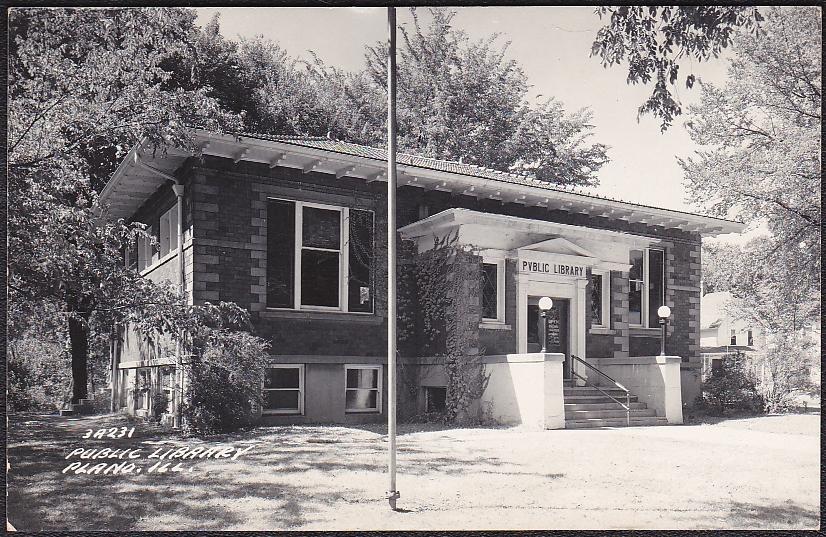
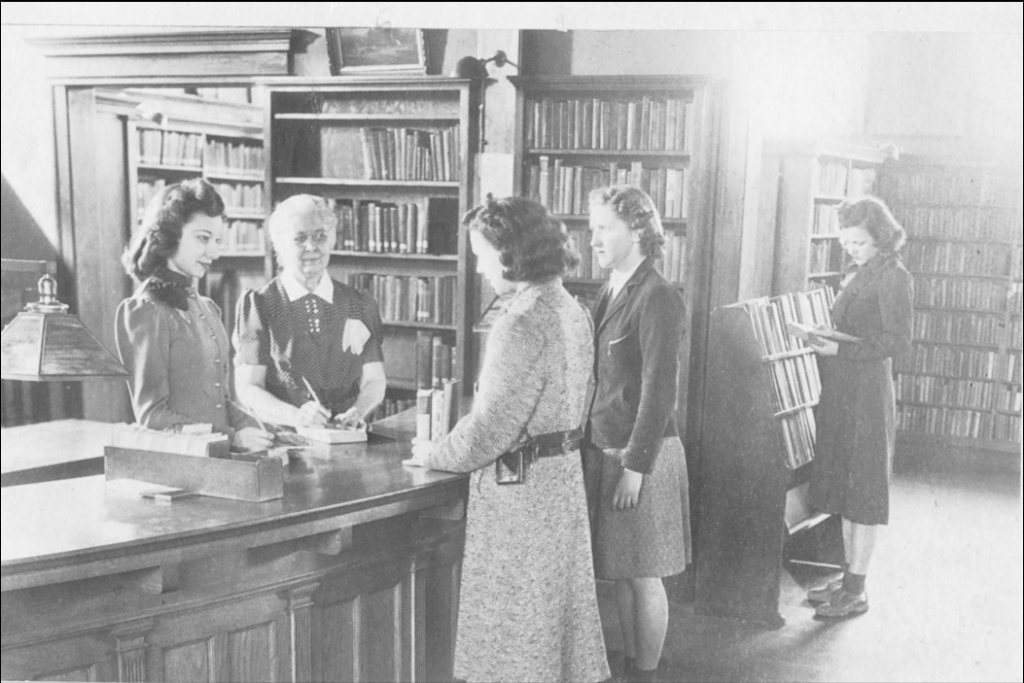
In 2026, Plano Community Library celebrates its one hundred twentieth anniversary on the corner of Center and North Streets. Originally known as Little Rock Township Library, it was formed in 1901, with Maude Henning as the librarian. A permanent location was needed, so the library board purchased the corner lot in 1904, and with grants totalling $10,250 from Andrew Carnegie, a library was built, opening in 1906. “Auntie” Maude Henning was library director almost continually until her retirement in 1951 at the age of 85.

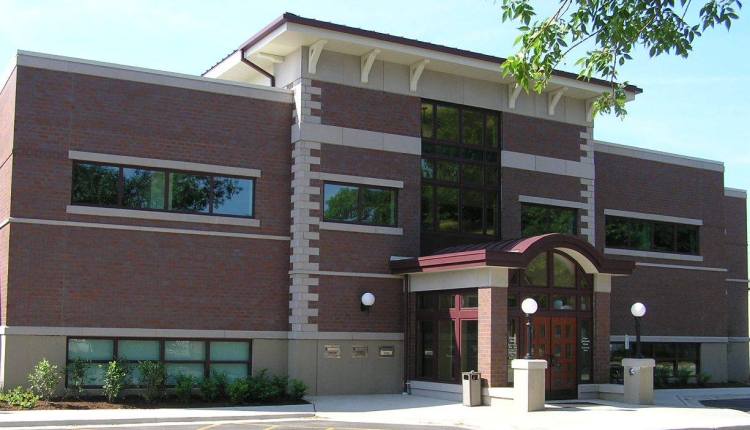
The nearly 5,000 square foot building served the community well for decades. In 1971, the front of the library was extended to include a new entrance and allow the collection to expand to the lower level. The 21st century brought growth to Plano and the need for more room for the library to continue serving residents. Under the leadership of library director Diana Hastings and the library board, the lot to the west was purchased so the library could expand. The community passed the library’s $4.8 million referendum and a 24,000 square foot addition was undertaken. Completed in 2004, the project included removal of the 1971 addition, restoring the east facing side of the library to faithfully resemble the previous facade.

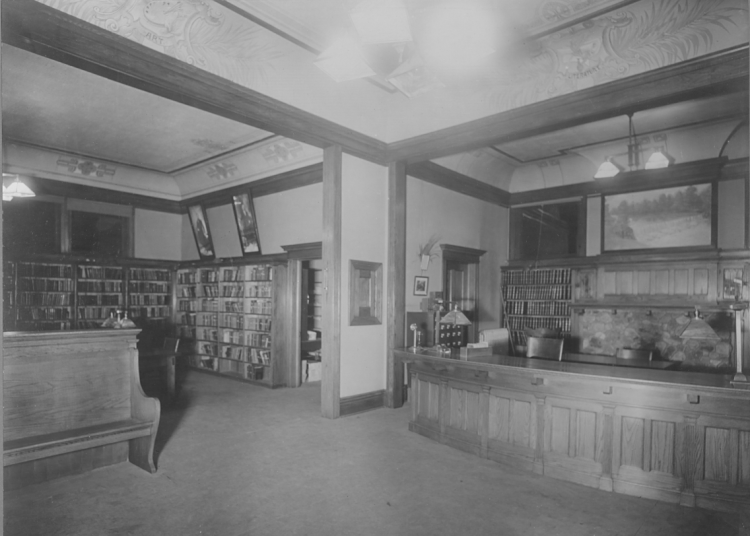
Today, the 1906 portion of the building, known as the Carnegie Room, still retains the original woodwork, fireplace, circulation desk, shelving and lamp shades, along with the grandmother clock donated in 1906 by the local women’s club.

Library Director Deanna Howard says, “A library is about more than the “things” inside it. Our library is about the people who walk through the front door and the staff who look forward to helping them. This building is beautiful because it brings us together.”

First in a series

UNCLE LAR’S PIZZA

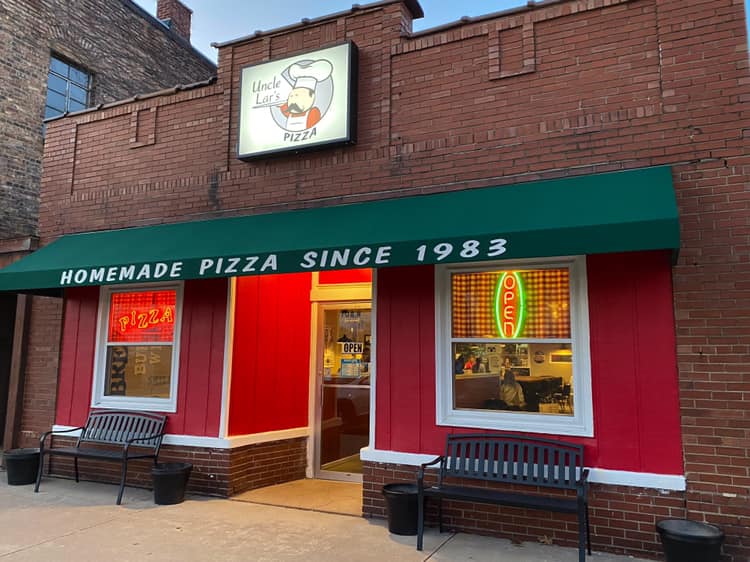
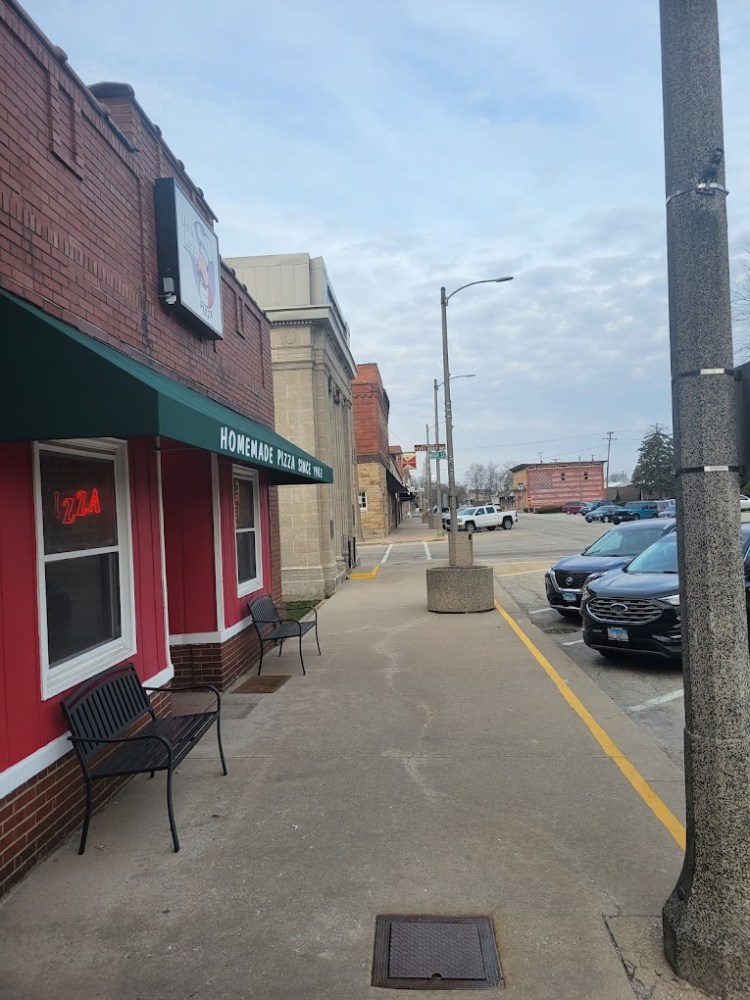
Many past and current Plano residents are familiar with Uncle Lar’s Pizza on Main Street, where we begin the first in a series of profiles of historic Plano businesses.

On August 29, 1983, Larry and Norma Albright opened Uncle Lar’s, carrying on the pizza recipe from B&W Pizza. Walter and Dorothy Kreminski had owned and operated B&W from the 1960s into the late 1970s, with a recipe brought from Tony Weed’s Pizza in Aurora. Larry Albright had worked at B&W, which was located at 209 W. South Street (Route 34).

Initially, Uncle Lar’s was on the corner of Main and West Streets, next to the Plano Bowling Alley. According to the Albright’s daughter, they started out with just two picnic tables and one oven.

A few years later, Uncle Lar’s was thriving and needed more space. They relocated to 108 W. Main Street where they still serve up pizza and more.

Larry and Norma ran Uncle Lar’s together until his passing in 2003. Norma continued the business until Jerry and Selaine Stegmann purchased Uncle Lar’s in 2017. Jerry passed on in 2022. The restaurant is now owned and operated by Selynda and Ryder Kern, and Chad and Kristen Humbers. Uncle Lar’s interior features historic photos of Plano and they still use the same recipe that the Albrights passed down.

An interesting footnote is this anecdote from Plano native and lifelong Uncle Lar’s Pizza fan, Beto Guajardo, now the CEO of Blaze Pizza. He tells of traveling to New York to visit the cheese supplier for Blaze restaurants and meeting company officials. He discovered that the supplier, Lactalis American Group, also sold cheese to Uncle Lar’s. Later, a Lactalis executive who’d met Beto, visited Chicago and decided to drive out to Plano where he enjoyed pizza from Uncle Lar’s. He snapped a photo in front of the restaurant and sent it to Beto, creating a special full-circle pizza moment.

His Reaper was not Our Harvester

Many have heard that Cyrus McCormick had a connection to Plano. Some websites mistakenly report that McCormick invented the Plano harvester, or that the reaper he patented was manufactured in Plano. The McCormick name is famous. We learned about the McCormick reaper in school because it was a significant advance in grain harvesting. But his reaper was not Plano’s harvester.

Cyrus McCormick got his start when he modified and patented the reaper his father invented. The reaper took the farmer from cutting grain with hand tools to reaping with a machine pulled by horses while farmhands followed, gathering the loose grain into bundles and tying them. Not primarily an inventor, McCormick used his business acumen to found and operate the McCormick Harvesting Machine Company to produce reapers and other farm implements, eventually gaining fame and fortune.

Plano, meanwhile, is the birthplace of the harvester. The harvester cut the grain and, in contrast to the reaper, deposited the grain on the machine’s platform where one or two people riding on the harvester could bind the grain and drop it to the ground to be stacked into shocks. The backbreaking work of gathering the grain from the ground and binding it into sheaves was exchanged for a quicker, less strenuous bundling process accomplished while riding on the harvester. This is Plano’s legacy.

The first successful harvester, one that did not break down shortly after it began its work, was manufactured in Plano. Brothers C.W. and W.W. Marsh invented the harvester with the aid of Plano’s John Hollister and Lewis Steward. The machine became another huge leap forward in grain harvesting. The first harvester factory opened in Plano in 1861 and by 1863 was selling the machines.

So why does Cyrus McCormick sometimes receive credit for Plano’s invention? Most likely it was the formation of International Harvester in 1902 that resulted in the confusion. Five companies merged to form International Harvester in order to reduce the fierce competition that had long characterized reaper and harvester manufacturing and sales. Two of the companies, Plano Manufacturing Company and Deering Manufacturing, had their origins in Plano, though by the time of the merger both were based in Chicago. McCormick Harvesting Machine Company was also among the five companies. Cyrus McCormick had been dead for 18 years by this time, but this joining of Plano’s namesake company with the McCormick firm is likely the cause for the confusion and misplaced credit for the invention of the harvester.

Cyrus McCormick can have his due credit for the reaper, but the harvester is an invention Plano can be proud to call its own.

WWI veteran’s medal finds its home

On February 7, 2023, Plano Historical Society members Anne Sears and Linda Hess, along with Sears’ sister Barbara, were presented with a medal honoring their grandfather’s service in World War I. Louis Sears was a pilot during the war, training pilots in the U.S. as well as serving briefly in France. His medal, along with several others, was recently found in storage at the Kendall County Circuit Clerk’s Office.

Medals had been awarded to the veterans during a 1919 picnic in Yorkville but some veterans apparently were not present to receive theirs.

Anne Sears plans to donate the medal and a photo of Louis Sears in his flight suit and helmet for display at Plano Historical Society’s museum.